Florida · Duval County · Jacksonville
Sell your Jacksonville house as-is, without making repairs first.
Tell us about the property and what you need from the sale. We will review the details, talk it through with you, and explain the next step clearly. Nothing is decided until you decide it.
Prefer to talk? Call (269) 389-9961 — no form needed.
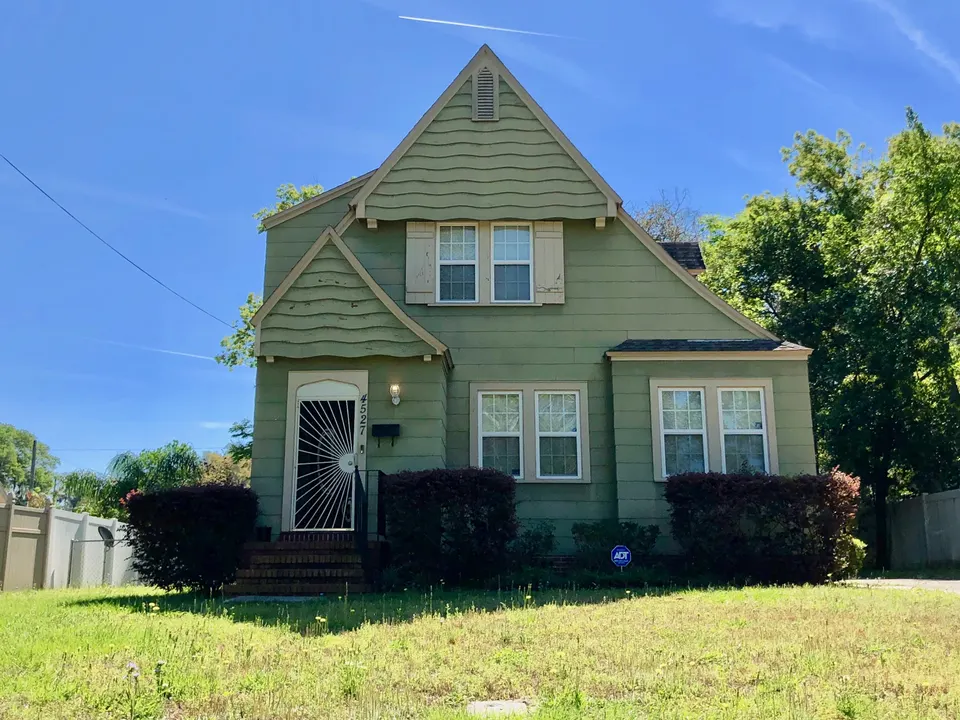
Photograph © Mathew105601, via Wikimedia Commons, licensed under CC BY-SA 4.0. Resized by Bayfront Home Buyers. Not a Bayfront property.

What as-is means here
You do not fix anything, and you do not clear it out.
No real-estate agent commissions, and you can sell as-is without making repairs first.
In this climate that matters for the things that are expensive to put right before a listing: a roof at the end of its life, air conditioning that has stopped keeping up, plumbing or electrical that was never updated, or a house that has simply had years of small repairs nobody got to.
It also covers what is left behind. Furniture, a full garage, a shed nobody has opened in a decade — you can leave it. Clearing a house out is one of the heaviest parts of selling, and it is the part people most often underestimate.
What as-is does not mean is that condition goes undiscussed. You will still complete the seller disclosure paperwork Florida requires, and we would always rather hear about a problem early than find it later.
Before you call
What actually happens on the first call.
It is a conversation, not a pitch. Most of it is us asking questions and you deciding how much you want to say.
- We ask about the house Where it is, roughly how old, what has been replaced and what has not. Guesses are fine — nobody is expected to know their electrical panel’s age.
- We ask what you need from the sale A date, a clean exit, the least possible involvement, or the highest number. These pull against each other, and it changes the advice.
- We explain how the price is worked out Openly, using the same framework on every property. You can check the arithmetic.
- You decide what happens next Including deciding it is not for you. There is no follow-up campaign if you say no.
No obligation, and no pressure to decide on the call. Ask as many questions as you like — most people do.
How a proposed price is worked out
Where the number comes from
No mystery to it — here is the same arithmetic we use on every house.
ARV − 20%–25% − estimated rehab costs = proposed price
- ARV means the estimated after-repair value. What the house would reasonably be worth once the work it needs has been done.
- The 20%–25% is calculated from ARV. It is a percentage of that after-repair value — not of the proposed price, and not of anything else.
- Estimated rehab costs are then subtracted. What we reckon the work will cost, based on what you have told us and what we see at the house.
- The result is the proposed price. Once we have seen the place the numbers firm up, and we will always talk you through how we got there.
This is a general framework for working out a proposed price — not an appraisal or guaranteed offer. The condition of the house and what the rehab actually comes to will move the number, which is why we like to talk it through with you.
Jacksonville specifics
What comes up here.
These are the subjects worth raising early in a Jacksonville conversation. If none of them apply to your house, that is a good position to be in.
- Roof age Insurers and lenders each take a view on how much life a roof has left, and where a purchase depends on financing or on cover being available, that view can matter. Whether it affects your property depends on the roof and on the buyer.
- Air conditioning A failed or ageing system in this climate is not cosmetic. Replacing one before a listing is a real expense at exactly the moment people can least afford it.
- Older urban-core housing Wood-frame and concrete block houses in the older neighbourhoods, often with original plumbing or wiring, and sometimes with additions built by a previous owner.
- Storm and water damage Wind, roof and water damage, work that was started and never finished, or a claim that was denied. All of it is discussable.
- Flood-zone questions Whether a property is in a mapped flood zone affects insurance and financing. The FEMA Flood Map Service Center is the official source, and the city publishes flood protection information as well.
- Unpermitted additions and open code cases An enclosed porch or converted garage with no permit behind it is common in older stock. So are open code cases on vacant houses. Neither has to be resolved before a conversation.
- Tenants still in place A sale does not by itself end a valid tenancy. What is possible depends on the lease and the transaction.
- Inherited title and probate Very common in the older neighbourhoods. What can be signed, and by whom, depends on where the estate has reached.
Selling to us
How selling to us works
Six things worth knowing before you get in touch.
We look at the actual house
The condition, the title, and what you are hoping to do — not an address run through a calculator.
Sell as-is
No repairs to arrange first, no contractors to chase, and no clearing the place out before anyone will look at it.
No agent commissions
You are selling directly, so there is no listing commission coming out of the sale, and you can sell as-is without making repairs first.
No showings or staging
Usually one visit, sometimes none at all. You are not keeping the house tidy for strangers on a Sunday afternoon.
We put it in writing
The price and the closing date are written down, so what you agreed to is on the page rather than in somebody’s memory.
Take your time
Read it at your own pace, ask us about anything in it, and have an attorney or a real-estate professional look it over first. We would encourage that.
Choosing a route
Three ways to sell a Jacksonville house
You know your situation better than we do. Here is the short version of each.
-
List it publicly
Fits homeowners who want broad exposure to the open market.
-
Take an offer from us
Fits homeowners who want an as-is sale and a simpler process.
-
Hold on to it for now
Still an option when selling is not yet the right decision.
Whichever way you lean, we are happy to talk it through.
Jacksonville areas
Where we work in the city.
We have looked most closely at seven ZIP areas, chosen because the housing stock and the questions sellers ask are broadly alike across them:
- 32206 — Springfield, Eastside, north of downtown
- 32208 — north Jacksonville, Norwood and Highlands
- 32209 — New Town, Moncrief, Grand Park
- 32210 — west side, Cedar Hills and Ortega Farms
- 32211 — Arlington and Fort Caroline
- 32244 — Argyle Forest and Jacksonville Heights
- 32254 — west of the city, around Whitehouse
If your address is in another Jacksonville ZIP, or in the Baldwin area, call and ask. Coverage is decided by our service area, not by whether we have written a page for your postcode yet.
Outside the city, we also work in Orange Park and Middleburg in Clay County, and Macclenny in Baker County. Areas further south — St. Augustine, Palm Coast, Daytona Beach — are being added in stages and are not covered yet. See Florida coverage.
Questions we actually get
Jacksonville questions
Do I need to fix the roof before selling?
Not to sell to us. Roof condition is something insurers and lenders each take a view on, so it can affect a purchase that depends on financing or on cover being available — part of why an as-is route exists. The condition is accounted for figure rather than being something you pay to put right first.
The house has storm damage and the insurance claim was denied.
That comes up regularly and it does not stop a conversation. What matters is what the damage actually is and whether any repair work was started. Bring what you know; if the claim is still open, say so, because an open claim can affect how a sale is structured.
There is an addition that was never permitted.
Common in the older neighbourhoods. It is worth checking what is on file with Building Inspection before you sell, because a buyer relying on financing will usually need it addressed. In a direct sale it is a known factor rather than a blocker.
I inherited the house and live out of state.
Also common. Distance is usually the easiest part to work around — the harder part is where the estate has got to, since that decides what can be signed and by whom. The inherited property page covers the usual sequence, and probate questions belong with a Florida attorney.
How fast can you close?
We do not publish a number, because a date that depends on title, an estate or a lienholder is not ours to promise. What we will do is tell you honestly what the timeline looks like for your property once we know what is attached to it.
Where is Bayfront based?
Bayfront works with homeowners across Michigan, Indiana and now Northeast Florida, and the number on this page is not a Jacksonville line. What we bring to a Jacksonville sale is a working knowledge of this market and a process that does not depend on being down the road.
General information about selling, not advice about your property. No structured FAQ markup is published pending review.
Related
More on selling here
- Duval County resourcesProperty records, probate, foreclosure, permits, code and flood information.
- Florida coverageWhere Bayfront works today, and what is being added next.
- Selling a house as-isWhat as-is honestly does and does not mean.
- Facing foreclosureOptions while there is still time, and free counselling contacts.
Tell us about the Jacksonville property
The address and a rough description is enough to start. Roof, air conditioning, tenants, an estate, storm damage — whatever the situation, it is one we have discussed before. Or call (269) 389-9961 and skip the form.
Tell us about your property Call (269) 389-9961
Sending the form starts a conversation. It is not an offer, and it does not commit you to anything.